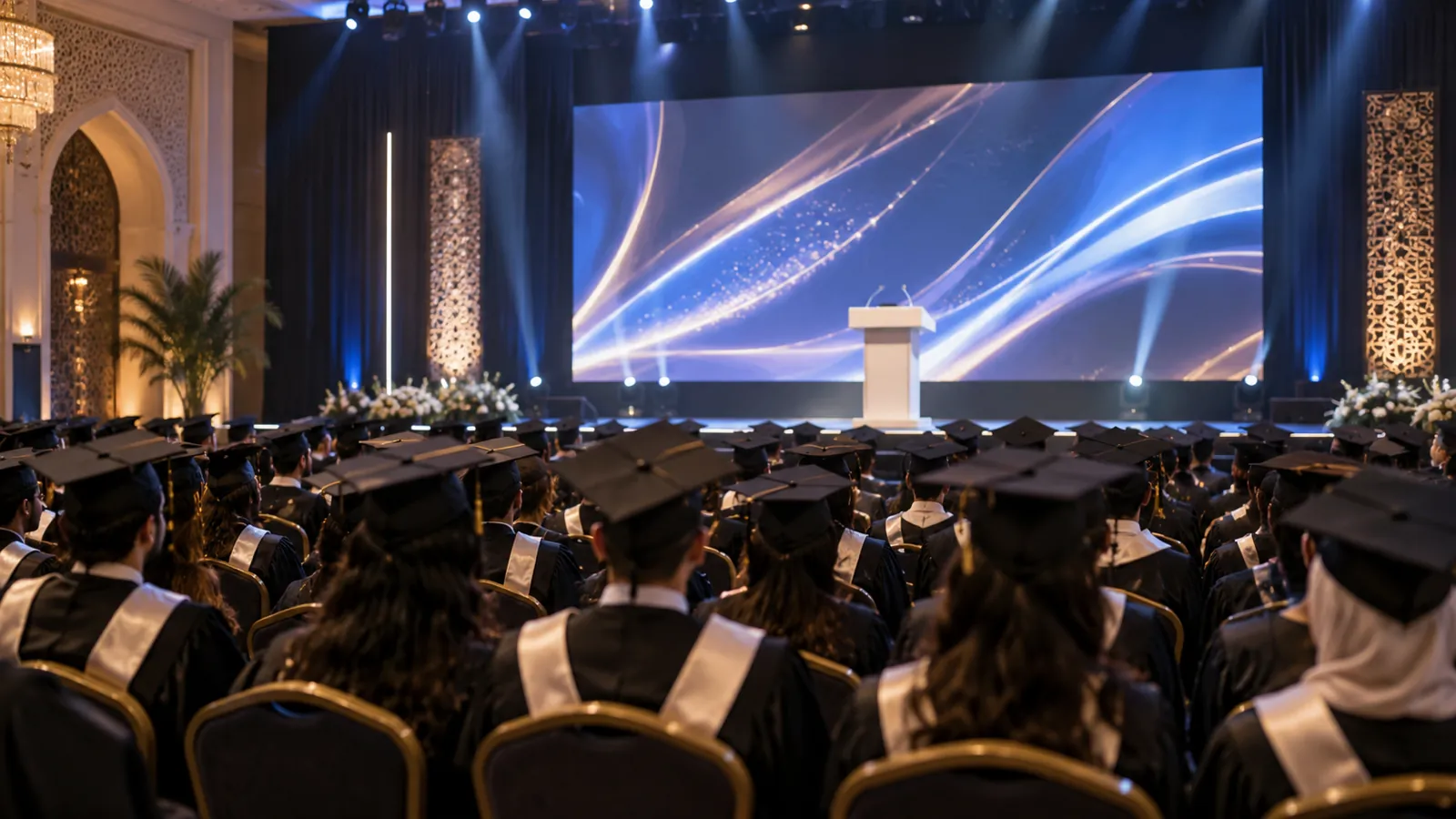
Schools, institutes and universities: a successful graduation ceremony comes down to a few decisions — the venue, the stage, the running order, welcoming families and the images. The guide to planning it in Tangier, with a countdown.
For a student, graduation is the day years of work get a face. For the school, it is a shop window: families, partners and the local press judge an institution by how its ceremony is run. In Tangier, institutes, private schools, training centres and universities hold this event every year. Here is how to plan a graduation ceremony that is solemn, smooth and warm.
1. Decide the spirit of the ceremony
Formal and protocol-driven, or festive with music and staging? There is no right answer, but the choice drives everything: the venue, the dress code, the length, the music, the place of speeches. A good approach is to alternate official moments (speeches, calling the graduates, handing over diplomas) with emotional ones (a memory video, a tribute, a student performance).
2. Count the people who will really come
The number of graduates is only part of the equation: each one comes with family. Add graduates, companions, teachers, management, guests of honour and partners to size the room. Decide early whether the number of companions per graduate is limited and say so on the invitation, to avoid tension at the door.
3. Choose the venue
- A lecture hall or room at the school: practical and economical, provided capacity, ventilation and access for families are sufficient.
- A conference hall or a hotel: a more prestigious setting, technical equipment sometimes included, but check the hours and decoration constraints.
- An outdoor venue or a marquee: a beautiful atmosphere, with serious preparation for weather, electricity and comfort (see our guide to the outdoor reception).
Visit the venue with your technical provider before committing: stage height, visibility from the back of the room, equipment access and power sockets decide the result.
4. Get the stage and technical setup right
The key moment is calling the graduates. The audience must see and hear:
- A stage big enough for speeches, the handover and the photo with the jury, with side access so people can move smoothly.
- An LED screen to show the graduate’s name and journey, a promotional video or the year’s slideshow.
- Sound: microphones for speakers, a dedicated microphone for the roll call, entrance and exit music.
- Lighting: stage lighting, soft light in the room, atmosphere for the highlights.
- A control desk with a technician present throughout.
We supply this equipment through our event equipment rental; see also the technical checklist to go through before the day.
5. Build a running order that stays on time
The main risk of a graduation ceremony is length: the more graduates, the longer families wait. A typical running order:
- Welcome for families, seating, background music.
- Entrance of the graduates (procession or by class).
- Welcome from management.
- Speech by a teacher, a class sponsor or a guest of honour.
- Memory video of the class.
- Roll call and handover, by programme or by honours.
- Speech by a graduate, thank-yous.
- Class photo, then a cocktail or reception.
Rehearse the roll call: mispronounced names are what families remember. Plan a host with clear transitions who can announce without improvising.
6. Welcome the families
A graduation is a family celebration. Plan hosts at the entrance, clear signage, seats for older people and those with reduced mobility, a photo area and, if possible, water or refreshments on arrival. For an evening or outdoor ceremony, add path lighting and marked parking.
7. Images: photo, video and live
Every family wants its photo: plan a photocall in the school’s colours, a photographer on stage and in the room, and a videographer for the ceremony film. For relatives far away or abroad, a live stream is a real service. See our event photo and video service.
8. The countdown
- 2 to 3 months before: date, venue, budget, concept, guests of honour.
- 6 to 8 weeks before: technical setup, decoration, catering, invitations, photo and video.
- 3 weeks before: final list of graduates and name pronunciation, programme, speeches up to date.
- 1 week before: procession rehearsal, video test, room plan and reception.
- On the day: set-up, sound checks, technical rehearsal, coordination.
9. Mistakes to avoid
- A programme overloaded with speeches.
- A screen or sound system too small for the room.
- A roll call that has not been rehearsed.
- Forgetting companions when working out capacity.
- No plan B (power cut, weather if outdoors).
Hand your ceremony to an agency
Faghloumi Events organised the graduation ceremony of an institute in Tangier: concept, decoration, stage, sound, lighting, LED screen, reception and images, with a project manager present on the day. Describe your ceremony: we reply with a proposal and a detailed quote, free and with no obligation. If your ceremony is part of a larger event, see also our seminar and conference page.
Questions? Message us on WhatsApp
Quick reply, free quote with no obligation. Tell us about your event in a few words.