Continental tournament, championship, big match: a major sporting event mobilises dozens of trades. Public services, catering, hospitality, technical setup, reception, signage: how an agency takes part, what organisers expect and how to prepare.
When Morocco hosts a major sports competition, the match is only a small part of what spectators experience. Around the pitch there is reception, catering, hospitality areas, signage, technical systems, entertainment and the flow of crowds: dozens of services that must work at the same time, sometimes in several cities. That is where an event agency comes in. Here is how to take part in the organisation of major sporting events, what the work demands and how to prepare.
1. A major sporting event is dozens of trades
An organising committee does not do everything itself. It relies on specialist providers for each function, usually several at once. An event agency brings what is specific to it: coordinating teams, setting up fast, holding a tight schedule and keeping a constant level of service throughout the competition.
2. The tasks where an agency steps in
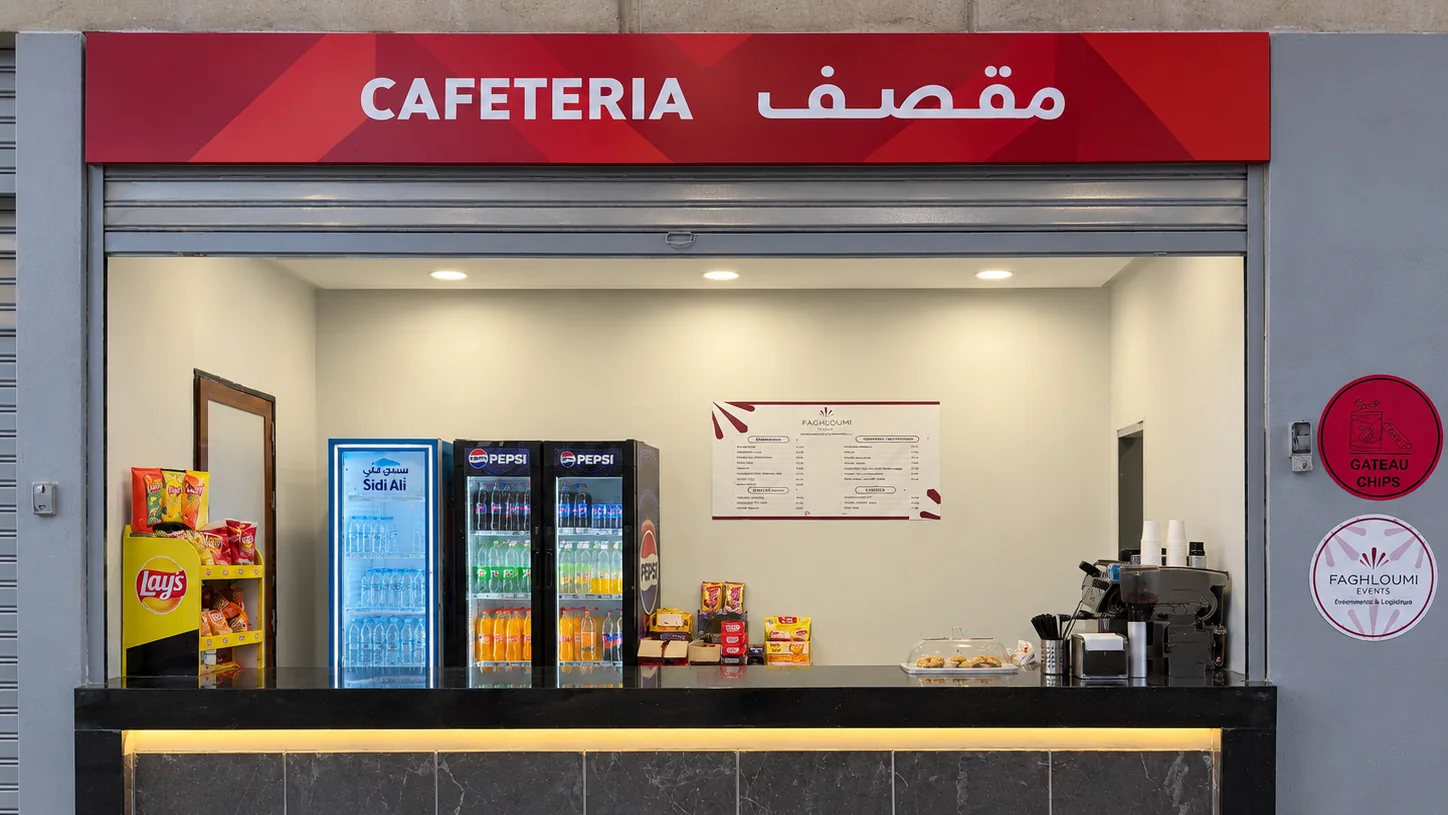
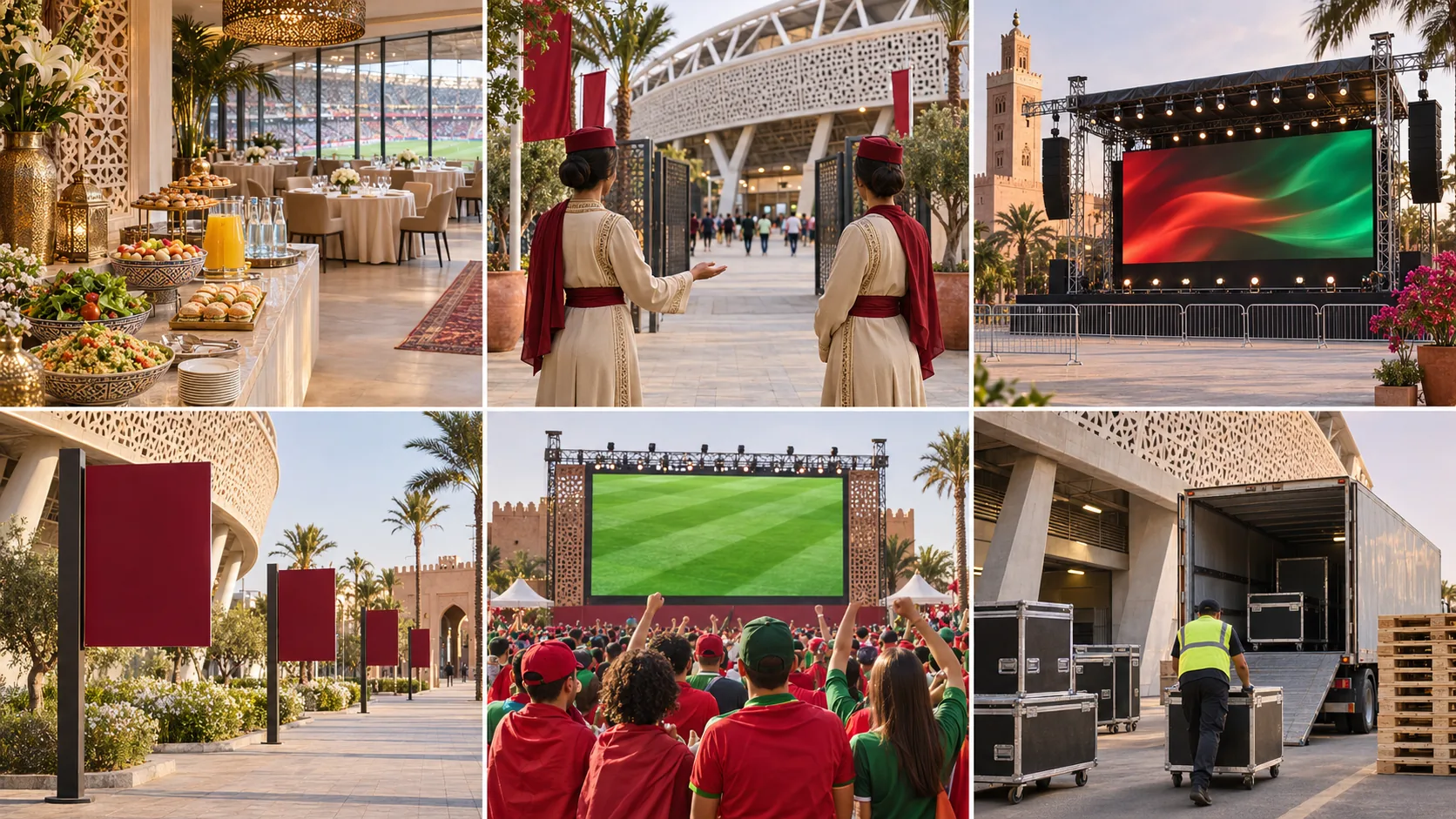
- Public services and catering: cafeterias, refreshment points, sales points in the stands or stadium corridors, with refrigeration, till, menu and service staff.
- Hospitality and VIP areas: welcoming guests, lounges, buffets, table service, managing guest lists.
- Reception and staff: hosts, orientation agents, service teams, queue supervision.
- Technical setup: sound, lighting, LED screens, stages for ceremonies and entertainment (see our guide to stage, sound and LED screen rental).
- Signage and dressing: wayfinding, signs, banners, dressing of service points, a visual identity consistent with the event’s.
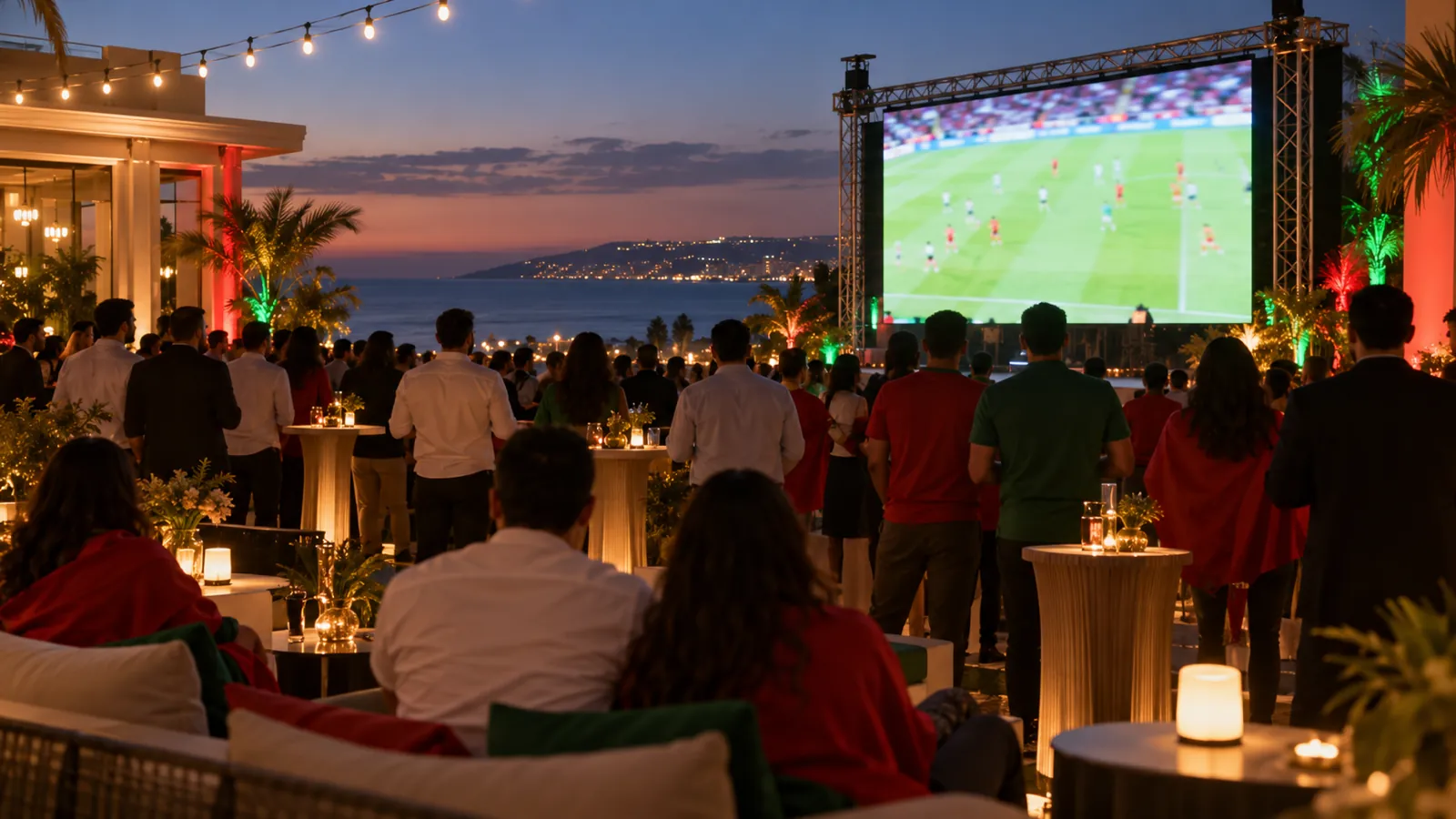
- Fan zones and entertainment: giant screens, music, games, entertainment before and after matches (see how to run a fan zone).
- Logistics: moving equipment, set-up, restocking during the event, dismantling.
- Image and communication: photo, video, content for social media (see our event communication).
3. How to take part in a major sporting event
There is no single way in. Needs are generally expressed in three ways: consultations launched by the organising committee, subcontracting handed out by the main providers, or partnerships with the cities and venues hosting the matches. To be chosen, an agency must show verifiable work, an available team, equipment it controls and the ability to work across several sites. Becoming known before the calls is an advantage: organisers prefer to work with providers they have already seen at work.
4. What organisers expect from a provider
- Reliable scheduling: a service point must be ready on time, every match day.
- Ready, trained staff: briefed, uniformed teams who know the site, the instructions and the routes.
- Hygiene and safety: clean food service, equipment in good condition, respect for the venue’s rules.
- Brand neutrality: respecting the event’s rules, notably the exclusivities granted to its official partners, in dressing as in offer.
- Responsiveness: restocking, replacing, correcting within minutes when a match changes attendance.
- A single contact: a project manager reachable at all times and able to decide.
5. The specific constraints of a stadium
Working in a stadium during a competition is nothing like an ordinary event:
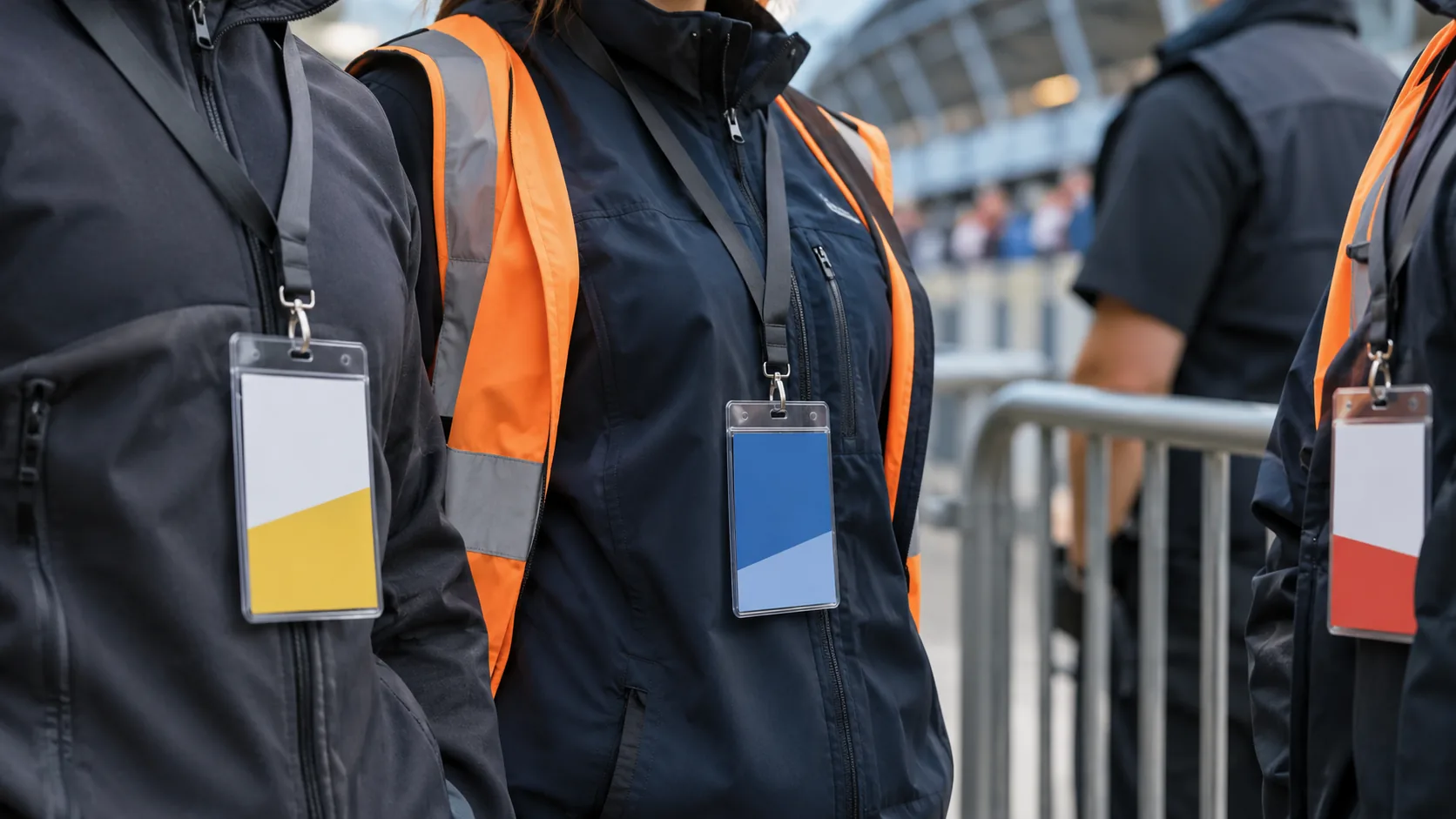
- Staff accreditation: each team member is registered with identity details, role and the site where they work, and must wear their badge to access the permitted areas.
- Security checks: equipment and supplies are checked at the entrance, with access slots to respect.
- Unusual hours: early set-up, evening service, late clearing, sometimes several days in a row.
- Tight spaces: a few square metres must hold storage, refrigeration, till and service; its layout matters as much as the menu.
- Attendance peaks: crowds concentrate before kick-off and at half-time; the service must be sized for those moments.
6. A field example: a stadium’s refreshment stands
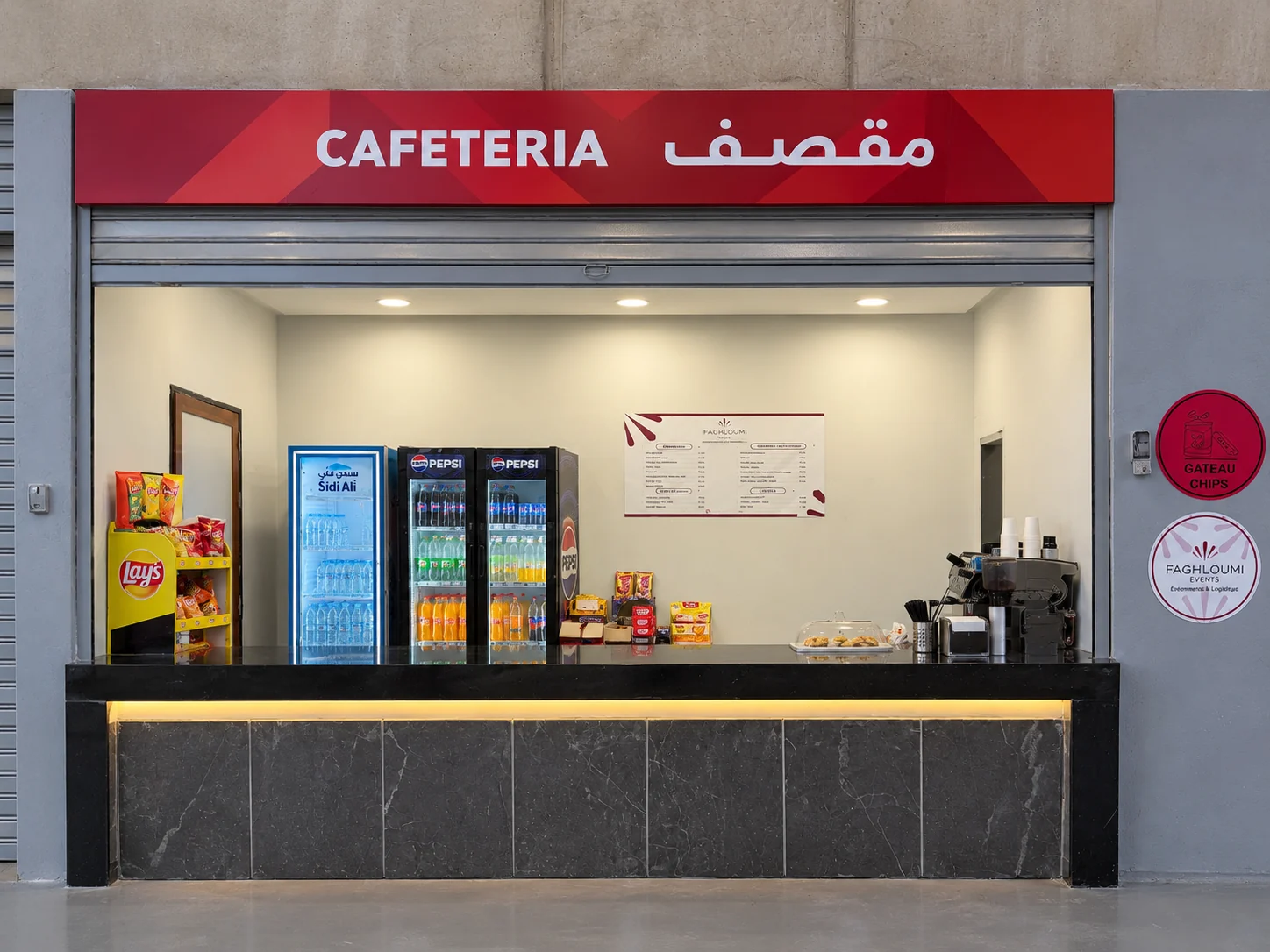
This is what we did with several stands during the Africa Cup of Nations matches. Equipping a catering point in a stadium means setting up a small shop in a few days. You need to fit out the counter, install refrigerated cabinets for drinks, present products clearly, display a readable menu in several languages, set up the coffee machine and the till, dress the point of sale in the event’s colours and train the service team. A clean counter, aligned products and clear signage reassure the public and speed up the queue.
7. Preparing: the countdown
- 6 to 12 months beforeIdentify the needs, build the reference file, meet organisers and main providers.
- 3 to 6 months beforeProposal and quote, staff recruitment and training plan, purchase or booking of equipment.
- 1 to 2 months beforeAccreditations, access plans, site visits, equipment tests.
- 1 week beforeSet-up, equipment checks, rehearsal of service routes.
- During the competitionDaily briefing, restocking, monitoring service quality.
- AfterwardsDismantling, debrief, organisers’ feedback.
8. Mistakes to avoid
- Underestimating the staff needed at peak times.
- Starting accreditation and access permits too late.
- Neglecting the restocking plan during the day.
- Dressing the point of sale without respecting the event’s brand rules.
- Having no replacements for teams on long days.
Faghloumi Events at major sporting events
Faghloumi Events was present at the Africa Cup of Nations matches in Morocco, with several refreshment stands in the stadiums and their public-service teams. This experience adds to our local sports events and fan zones, with our own equipment — stage, sound, lighting, LED screens — and a project manager present on the ground. Tell us about your sporting event: we propose a tailored organisation and a detailed quote, free and with no obligation. See also our public event and festival and event agency in Tangier pages, and our guide to sports events and association galas.
Questions? Message us on WhatsApp
Quick reply, free quote with no obligation. Tell us about your event in a few words.