
Tangier, Tetouan, the Rif: three regions, three ways of celebrating a wedding. The steps (engagement, henna, lebsa, negafat, amariya…), the customs most often met, and how Faghloumi Events adapts the celebration to each family’s customs — including separate receptions for men and women.
Tangier, Tetouan and the Rif share the same Moroccan culture of weddings — joy, generosity, care for outfits, music and the table — but each region, and each family, has its own way of doing things. This guide presents the steps of a traditional wedding as they are most often met in northern Morocco, the sensibilities specific to Tangier, Tetouan and the Rif, and how we adapt the celebration to everyone’s needs and customs. Customs vary from one family to another: this text is not a rulebook, it is a starting point for discussing it with your own.
The main steps of a traditional wedding in northern Morocco
1. The proposal and engagement
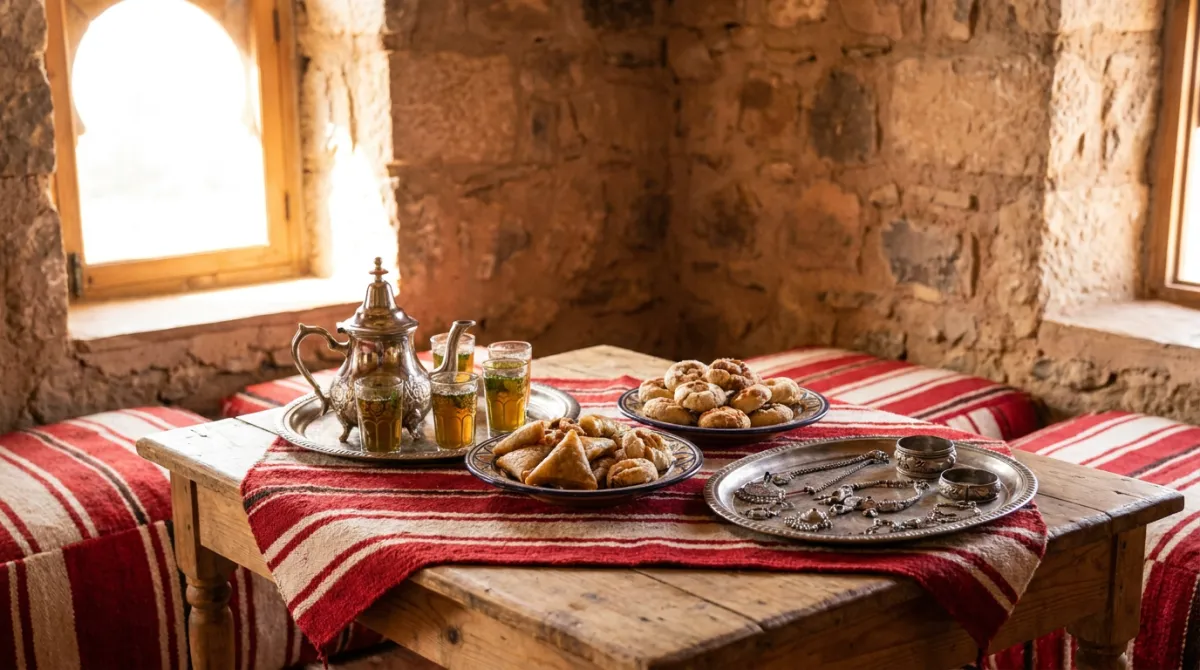
It all begins with the proposal (the khotba): the groom’s family visits the bride’s, an agreement is reached, the Fatiha is read, and tea, pastries and gifts are shared. Depending on the family, the engagement may have its own reception.
2. The marriage contract
The marriage contract is drawn up according to the legal procedures in force. Families often make it a celebration in its own right, before or on the day of the party. Check with the authorities for the formalities; we take care of the celebration.
3. The bride’s hammam and the henna night
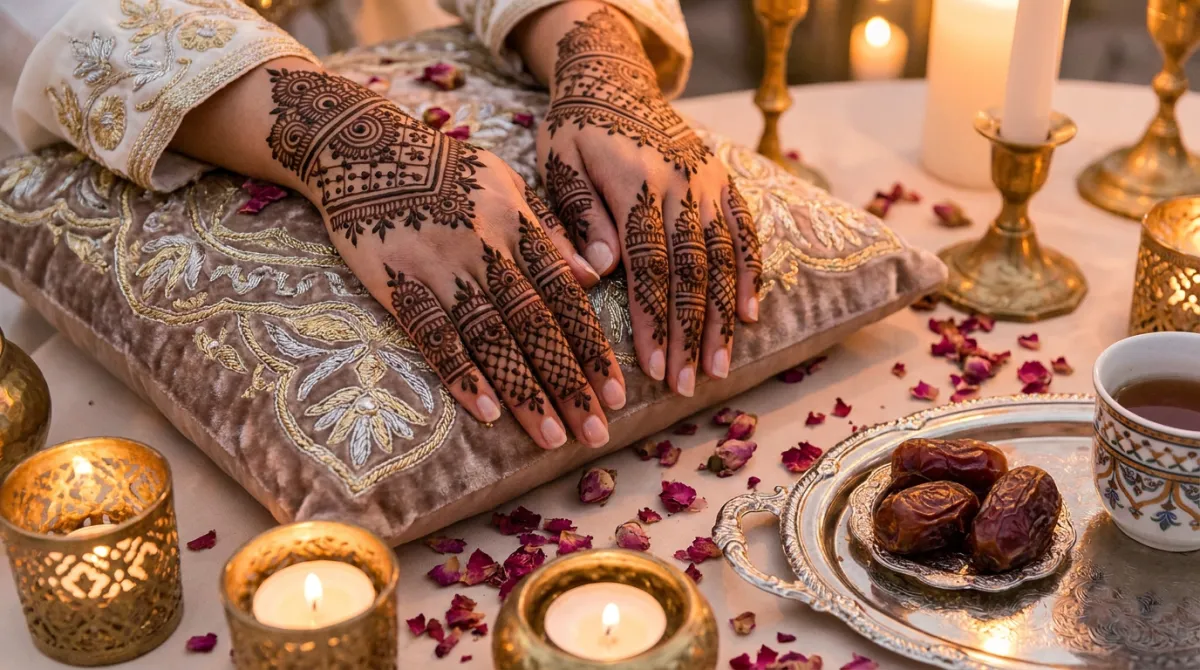
The bride prepares among women: hammam, care, then the henna night, an intimate and warm moment when henna designs are applied, songs are sung and wishes of happiness are offered. It can take place at home, in a salon or a small hall.
4. The wedding day: the lebsa, the negafat and the bride’s entrance
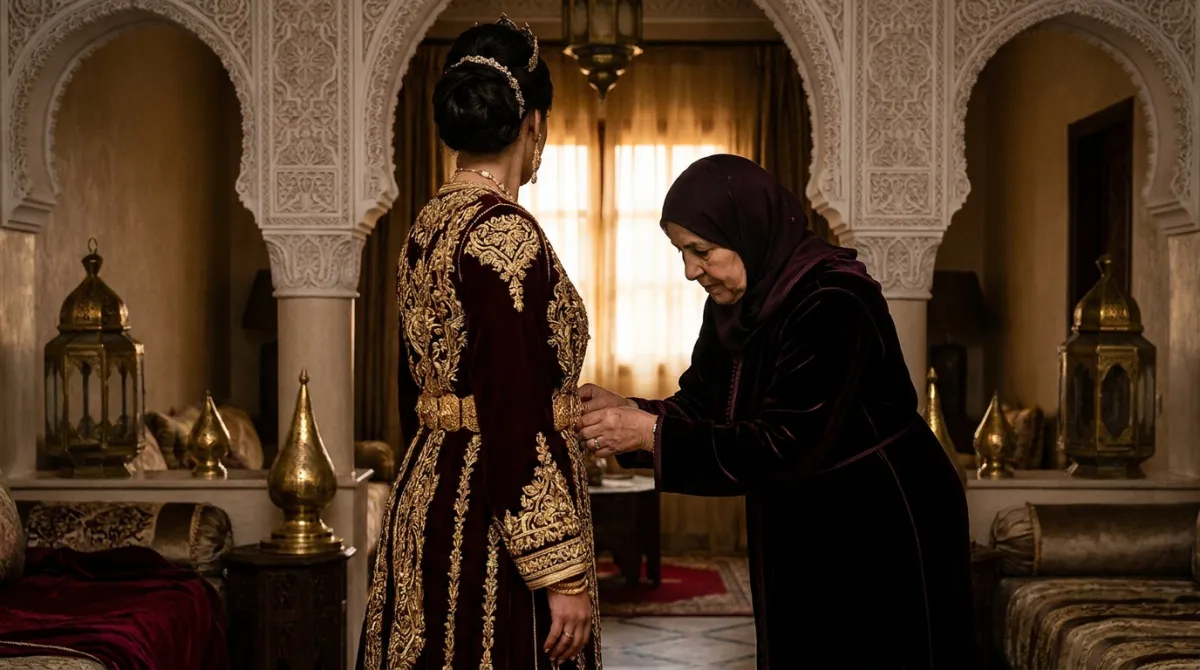
The heart of the celebration is the succession of lebsa, that is, the bride’s outfits: caftan, takchita, embroidered ceremonial dress, jewellery. Each passage is prepared and paced by the negafat (the plural of negafa): they dress the bride, do her hair, adjust jewellery and belt, announce each entrance and orchestrate the traditional moments. A negafa often works with a small team.
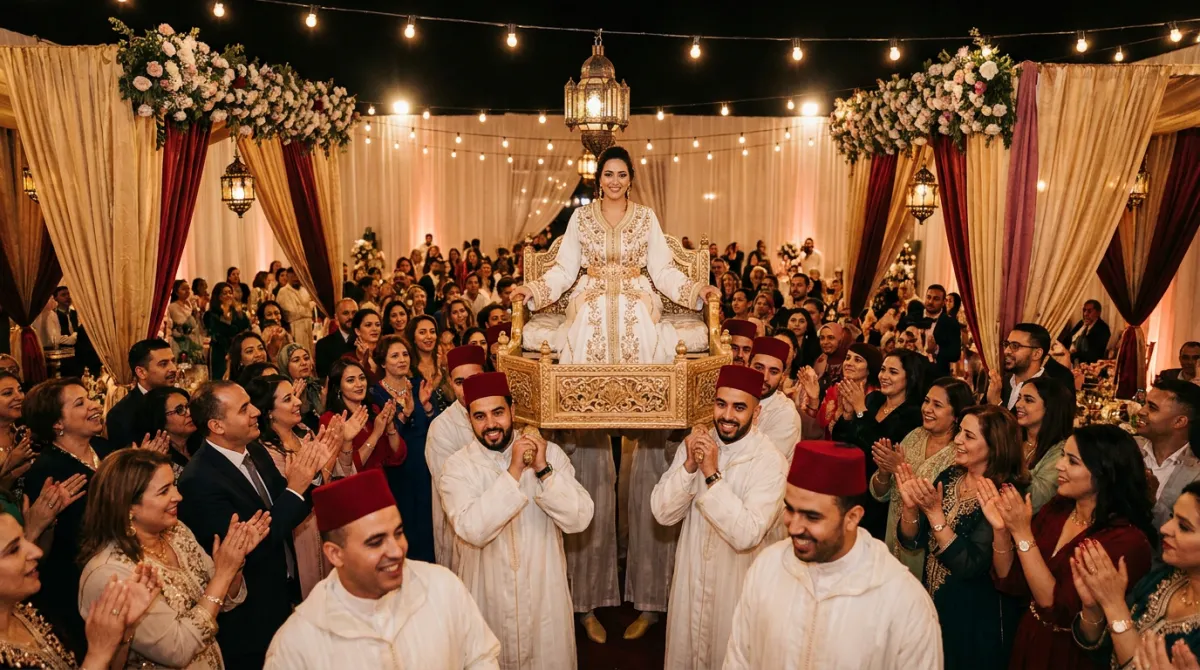
The bride often enters on the amariya, the decorated seat carried by bearers, to the sound of the traditional group.
5. The meal, the cake and the dancing
Then comes the meal, with its service and running order, the cake, the sweet table, then dancing, which carries the evening on with the traditional group, the band or the DJ. See our guides to the wedding caterer and wedding music.
6. What follows
Depending on the family, other moments extend the celebration: reception of relatives, a visit the next day, a family meal. We plan them with you if you wish.
What changes from one region to another
Tangier: a crossroads city
Tangier is a city of passage and mixing: families from the city, the nearby mountains, the rest of Morocco or abroad; very traditional weddings as well as more modern ceremonies. Many weddings there are mixed (men and women together) and held in wedding halls, hotels, villas or under marquees. A traditional group and a DJ are often combined, with ceremonial outfits and contemporary decoration. See our event agency in Tangier page.
Tetouan: a taste for refinement
Tetouan, a city with a rich Andalusian heritage, is known for its attachment to tradition and refinement: embroidered outfits, jewellery, a fine table and carefully made pastries, heritage music. Families there want every stage of the celebration to be respected. See our event agency in Tetouan page.
The Rif: often separate celebrations, a proud Amazigh culture
In the Rif, in Al Hoceima and across the region, Amazigh (Tarifit) culture gives the celebration its identity: music, songs, dances, traditional outfits and jewellery, generous hospitality. In many Rifian families, men and women celebrate separately — in two halls, two spaces or at two times — out of modesty and respect for custom. It is the family’s choice, and we organise it with care. See our event agency in Al Hoceima page.
How Faghloumi Events adapts the celebration to your family
We impose no model. At the first meeting, we listen: what are your families’ customs, who will be there, which moments are essential, which would you rather avoid. Then we build the running order accordingly.
A mixed or separate reception, as you choose
If you want men and women to celebrate separately, we organise two spaces (two halls, two areas of the same venue or two celebration times), each with its own entrance, decoration, sound system, service and running order, coordinated with each other: timings, meal, the couple’s arrival, the cake. A dedicated team is present on each side.
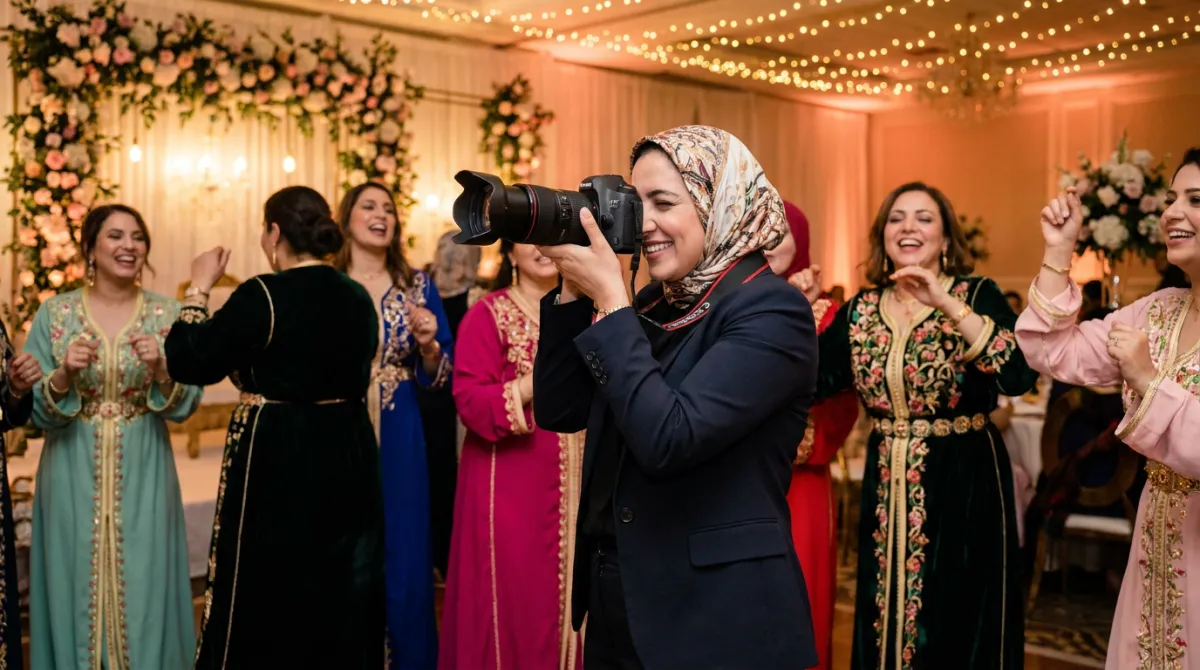
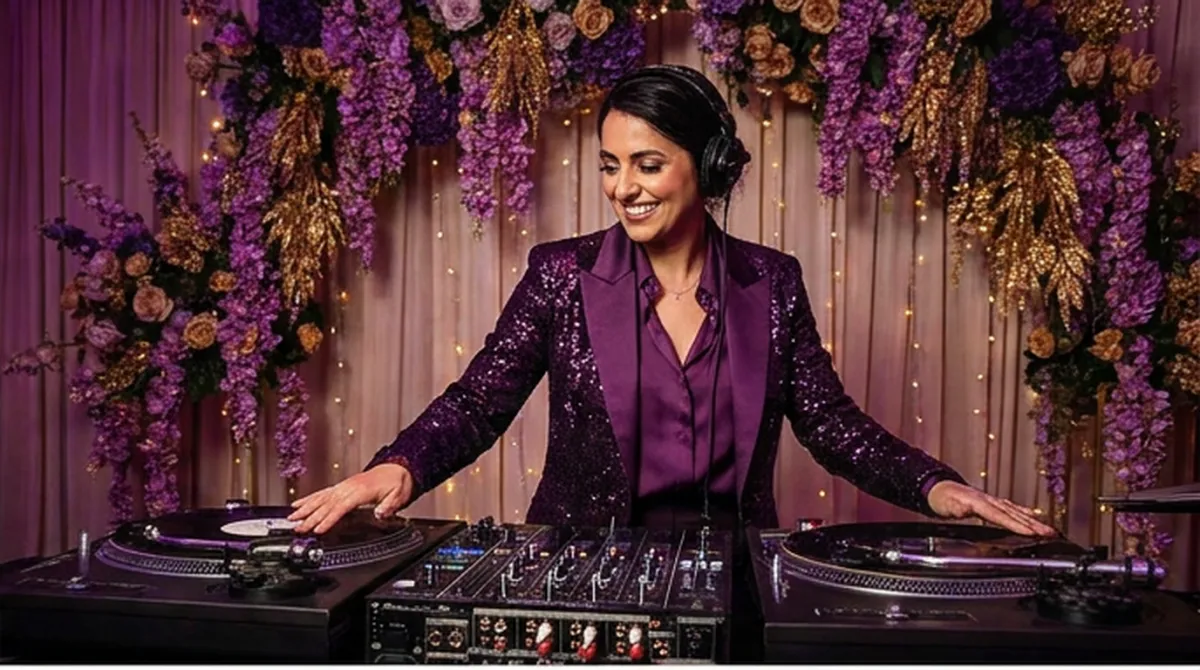
Women photographers and women DJs, to respect customs
So that women feel completely at ease, we have professional women photographers and women DJs, as well as women service teams, who work in the women’s space. On the men’s side, a male team takes over. We agree with you in advance what may be photographed or filmed and who will receive the images: photos of the women’s space stay within the family.
The outfits, negafat and music of your region
We coordinate the lebsa with the negafat you have chosen: dressing rooms, outfit-change timings, handover to the traditional group. We book the group or musicians that match your region and family — heritage music, local songs and dances, a band — and set the sound so that every moment is audible without being harsh.
A decoration that looks like you
Moroccan tradition, Andalusian spirit, Rifian touches or contemporary decoration: we compose an atmosphere consistent with the venue and your tastes, without gimmicks. See our wedding decoration ideas.
One contact, two spaces, one running order
A project manager coordinates everything, from set-up to dismantling, with the leads of each space. Families do not handle the logistics: they enjoy themselves.
The questions we are asked
Can you organise a wedding with men and women separate?
Yes. We organise two spaces or two celebration times, with dedicated teams, a coordinated running order and suitable suppliers.
Do you have women photographers and DJs?
Yes: professional women photographers and women DJs for the women’s space, to respect your families’ customs.
Do you also organise weddings in Tetouan and the Rif?
Yes, in Tetouan, Al Hoceima, Asilah, Chefchaouen, M’diq-Fnideq and other northern cities, taking local customs into account.
I do not yet know what our families want: where do we start?
With a conversation. Write to us or call us: we help you list the important moments, choose the format (mixed or separate) and build a running order that respects everyone.
Faghloumi Events is based in Tangier and works across northern Morocco. Discover our wedding planning in Tangier or read the complete guide to planning a wedding in Tangier.
Questions? Message us on WhatsApp
Quick reply, free quote with no obligation. Tell us about your event in a few words.


